
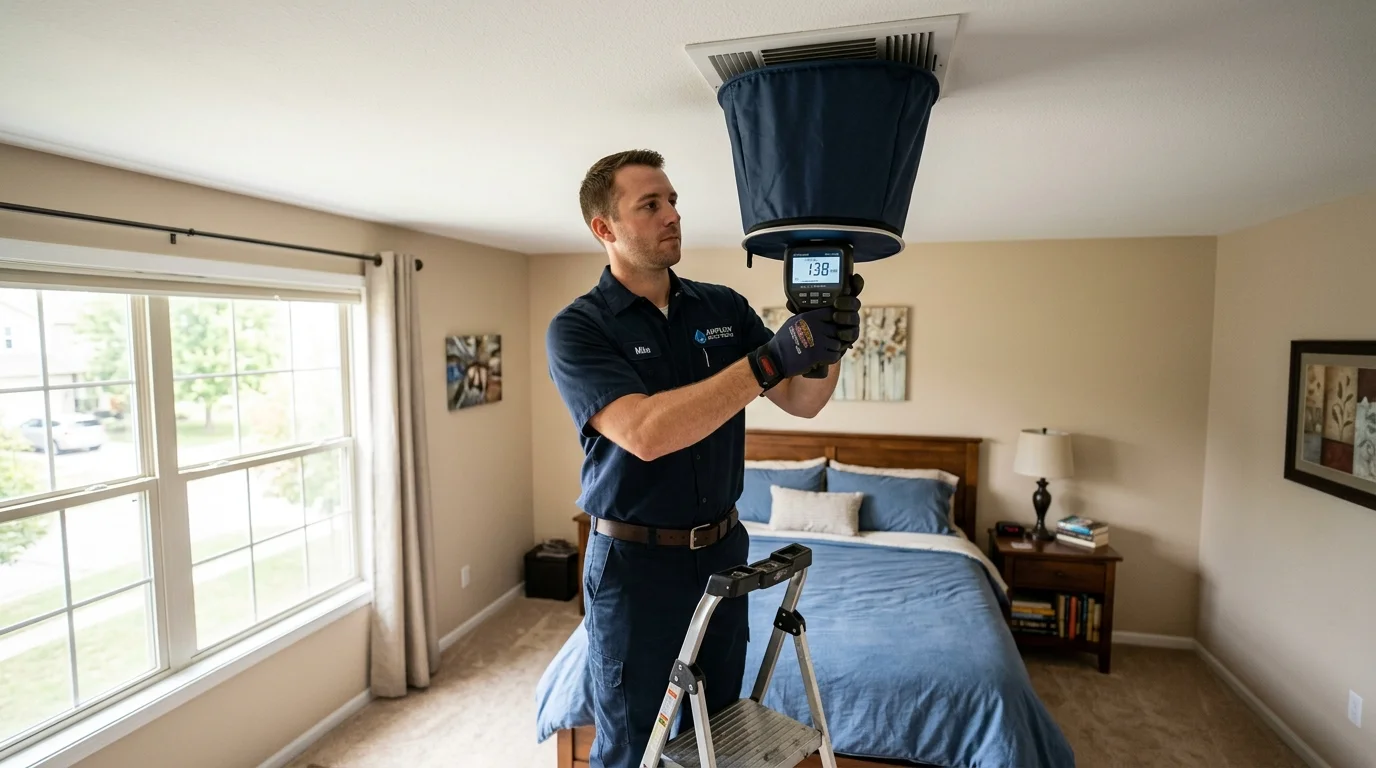
Upper floors gain heat through the roof and often get too little airflow because duct runs are long, returns are missing, or ducts leak in the attic. The usual fixes are adding returns, sealing and insulating attic ducts, balancing, zoning, or a dedicated ductless unit for the top floor, not a bigger AC.
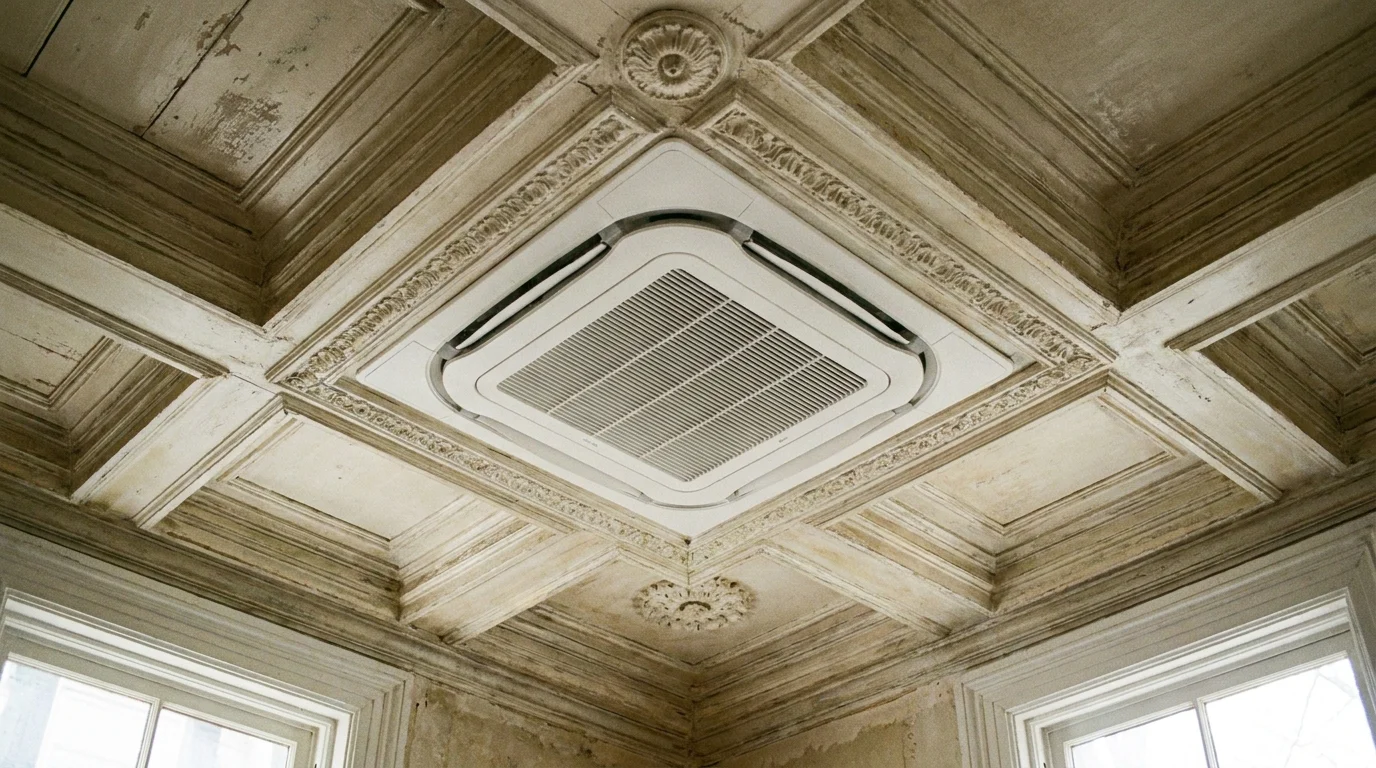 Technical Consideration
What should be measured before changing anything?
Compare room temperatures, supply airflow, return paths, attic conditions, and equipment run time.
A difference of more than about 3 to 4°F between floors usually points to distribution rather than equipment size.
Why is a bigger AC usually the wrong fix?
A larger unit can short-cycle, reduce humidity control, and leave the distribution problem unchanged.
You end up with a colder first floor and the same hot bedrooms.
Which fixes work in Wilmington rowhouses?
Rowhouses often have no room for new ducts, so a high-wall or ducted mini-split on the top floor is common.
Sealing the attic floor and adding insulation also reduces the heat reaching the third floor.
Which fixes work in suburban two-story homes?
Adding upstairs returns, sealing attic ducts, balancing dampers, and two-zone controls often solve it.
Setting the fan to run continuously can help even out temperatures in some homes.
Related services in Wilmington
- Ductwork & Airflow Services in Wilmington, DE
- Ductless Mini-Split Installation in Wilmington, DE
- Duct Sealing & Aeroseal in Wilmington, DE
- Smart Thermostats, Zoning & Controls in Wilmington, DE
Local verification resources
Before authorizing work, use the Delaware license lookup. For projects that may require approval, consult the City of Wilmington permit information or the authority serving the property.